What Size Are You?
Asking “What size are you?” of someone you don’t know really well can be very uncomfortable. I would be extremely unlikely to tell anyone my clothing size unless I knew them intimately, and even then I’m not sure that I’d be willing to part with what (in my opinion) is considered “classified information”. That being said, I will be the first one to admit that I’ve been given many clothing items over the years that have never seen the light of day because they were the wrong size — usually too small. Even though I was flattered that the gift giver thought I appeared thinner than I really was, it would have made life easier just to give them the necessary information. (No wonder gift cards are so popular these days.)
Clothing that is too large can usually be altered and taken in (especially when the person is handy with a sewing machine), but items that are too small can only be returned to the store for a larger sized item, re-gifted to a trimmer (usually younger) version of the person, or stored in the closet for future wear for the time that they “will lose the extra weight". (We won’t even go into clothing colors as that is another potential sore point that deserves a separate article!)
So, how can you find out what size someone is? Well, the obvious thing to do would be to ask them! (Good luck with that.) It’s not easy to buy clothes for someone else unless they tell you and even then, different brands size their clothes differently, so what is a 10 in one store will actually be a 12 in another. Most women won’t want to tell you what size they are. Guys are easier in that respect, but a lot of them don’t know!
How sneaky can you be? Don’t guess at sizes — that’s a sure way to have a gift returned.

- Check the size of a sweater or jacket by offering to hang it in the closet…see if you can find a store or brand label.
- Go into his/her closet and have a look at the clothes you know are their favorites because you’ve seen them wearing them. Remember, just because it’s in the closet doesn’t mean it fits them now!
- Ask a friend or roommate if they know or if they can investigate for you.
- Next time you go shopping with them, remember which clothes they commented on and which stores/departments are their favorites.
- Spill something on their clothing and offer to put it in the wash — checking the label and (hopefully) the sizing tag. (Not really a good idea if the item turns out to be “dry clean only”.)
- Ask them to fill out the Gyftit Questionnaire so you can save yourself a lot of guessing.
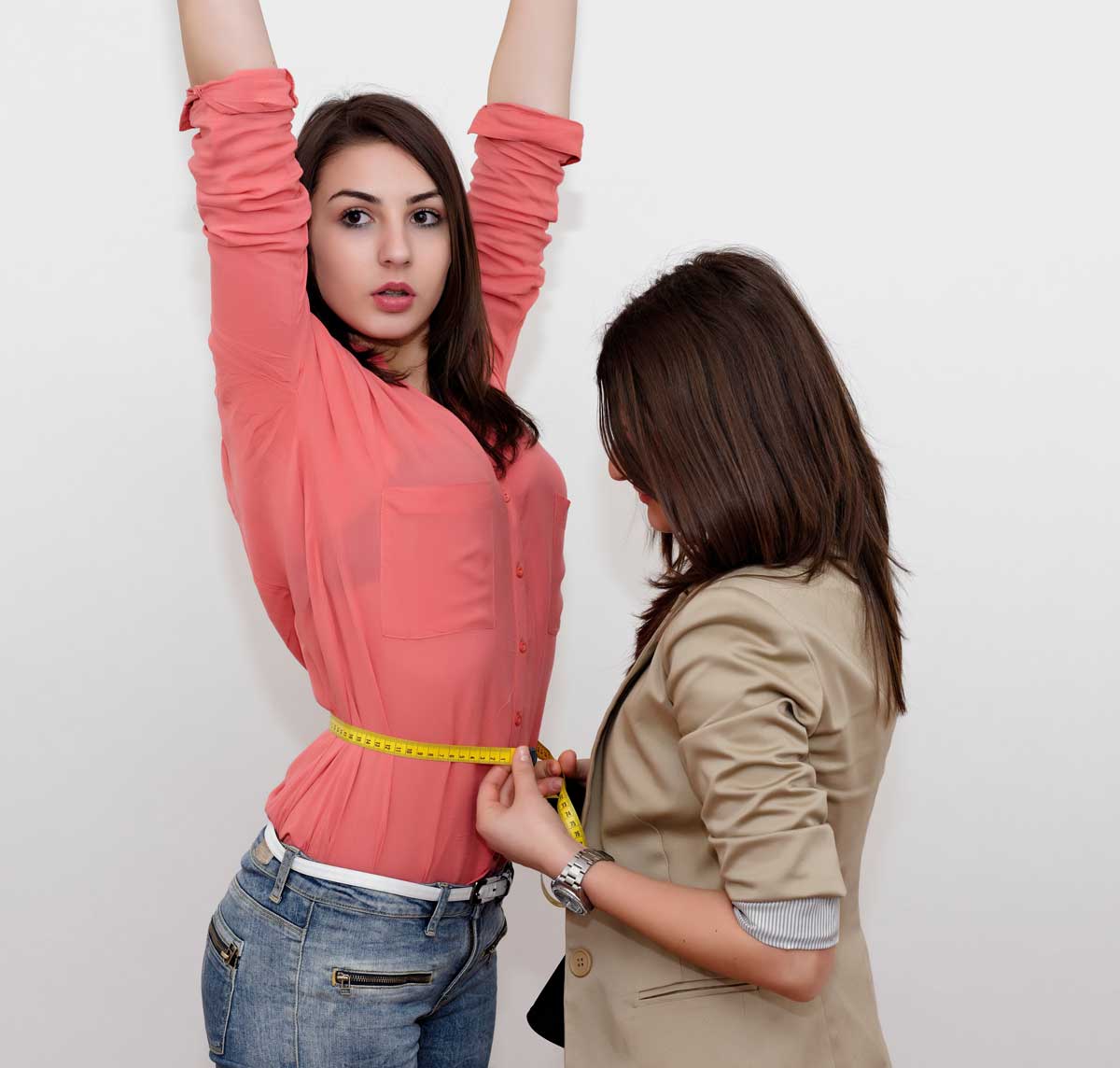
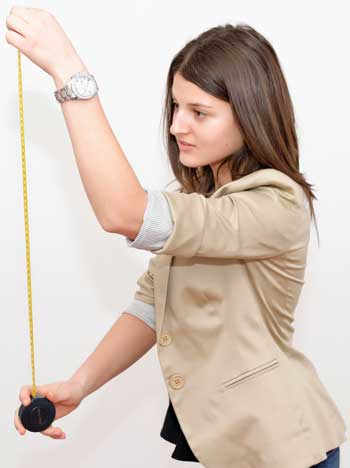
 You’re about to measure someone (maybe yourself) to ensure the clothes you buy will fit nicely! Use a cloth or flexible measuring tape (not the one you use to measure wood and drywall) so the measurements are as accurate as possible. For
best results, have the person wear their undergarments. If that’s not possible, then tight fitting clothes might be OK. If you’re really comfortable with the person, the “Lady Godiva” look also works (however, note that a properly fitting
bra will give you a different bust measurement than just letting "the girls” hang loose)!
You’re about to measure someone (maybe yourself) to ensure the clothes you buy will fit nicely! Use a cloth or flexible measuring tape (not the one you use to measure wood and drywall) so the measurements are as accurate as possible. For
best results, have the person wear their undergarments. If that’s not possible, then tight fitting clothes might be OK. If you’re really comfortable with the person, the “Lady Godiva” look also works (however, note that a properly fitting
bra will give you a different bust measurement than just letting "the girls” hang loose)!
Making sure the measuring tape is parallel to the ground and not too tight, measure under the arms and around the fullest part of the bust/chest. Measuring for a bra is a little more complicated. (See our article on "How to Measure "The Girls".)
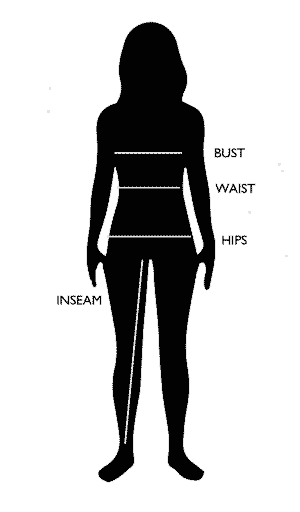
Have the person bend to one side. The “waist crease” created will be the location of the natural waist which is usually the smallest part of the waistline. Measure around at that point.
Measure around the widest part of their hips and rear while they stand with their feet together.
Measure from the crotch to the ankle on the inner leg — this can be done without shoes. For dress pants or pants to be worn with heels, wear the shoes and measure from the crotch to the bottom of the shoe. Remember, you can always hem pants if they are too long, but you can’t add length if there is not enough material, so if in doubt, longer is better.
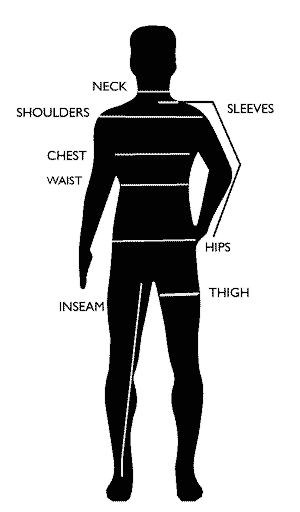
This is a common measurement for men’s shirts. With a finger underneath the tape to make sure the collar is not too tight, measure around the fullest part of the neck “eyeballing” where a shirt collar would normally sit. Round up this measurement to the nearest ½ size.
Also mainly used in sizing men’s dress shirts, measure this length by having the person bend their arm and place it on their hip. Starting at the center of their back, measure across their shoulder, down the elbow and then to the wrist. Round up to the nearest whole number (shirt sleeve lengths are always in whole numbers and range from 32 to 39 inches).
This method may not be completely accurate, but it works pretty well on items that have a little “give” in the fabric. Carry a small tape measure with you — it will come in handy when you have clothing that doesn’t have a size label.
Tops/sweaters/jackets: Lay the item on a flat surface. If there are buttons, button them all the way down. Measure the chest/bust area just under the armpits (see pic) and double the measurement. For example, if the measurement is 18”, double that and you have 36”. If you know the item you’re measuring is tight on the person, add a half inch. Also measure the bottom of the item to make sure it will fit over the hip area (and double it).
Skirts/pants: Lay the item on a flat surface and make sure all zippers or buttons are closed. Measure the waist band and also around the hips and make sure you double the measurement (2D people only exist on paper). The hip area should also be measured — this will be about 8 inches below the waistband. Measure the inseam on the pants (the length of the inner leg from the crotch seam to the bottom of the pants). Remember to add some extra length (about ½ inch) if you want to buy something that will be worn with heels.
These measurements should be enough to get a basic idea of sizes. You can then compare sizes with a sizing chart of an online retailer to get a good idea if the item you want to purchase will fit or not. Take a measuring tape with you to the store. I usually do, especially if I’m somewhere new.
Click to see tables of different countries' Clothes & Shoe Sizes
Some garments are labelled with “Relaxed fit” or “Comfort fit”. This simply means that even though the size may be the same as the other item of clothing, the garment has a bit more “ease” (room) than the other more form-fitting style.
When in doubt, don’t be afraid to ask a salesperson. They should be able to help as long as you have the measurements.
- Avoid buying overly sexy underwear items as a gift unless it’s Valentine’s day, and then only if you have a fun, romantic relationship. Crotchless panties or boxer briefs with sound modules that play “Jingle Bells” will quickly find their way to the back of the underwear drawer. Buy something tasteful. Comfy pyjamas at Christmas are always welcome (unless the person sleeps “commando”).
- Even though most bathrobes are “one size fits all” most men don’t wear them unless they’re trying to emulate Hugh Hefner. A better gift would be a comfy pair of joggers and a T-shirt that they can lounge around in. However, a cosy bathrobe for a woman would probably be appreciated. Just make sure it fits.
- Don’t buy clothes for someone in a color that you like if you’ve never seen them wearing that color. I’ve gotten more yellow clothing than I know what to do with (well, I actually know what to do with it — it usually finds its way to a Goodwill store).
Copy these prompts. Paste them into your favorite AI application. Get more information.

International Sizing Conversion
Create a clear, concise guide explaining how to navigate the major differences between US, UK, EU, and Asian clothing sizes for both men and women. Include tips on using size charts from international retailers.
Fabric and Fit Guide
Explain how different fabrics (e.g., cotton, spandex, wool, silk) and weaves affect fit and sizing. Provide advice on how to adjust measurements or size choices based on whether a garment is made from a stretchy, rigid, or shrink-pone material.
Online Shopping Strategy
Outline a step-by-step strategy for successfully buying clothes online for someone else. This should include how to secretly ascertain their size from existing items using brand-specific size charts, understanding customer reviews about fit, and navigating return policies.
Additional Resources
List reputable brands that specialize in extended sizing (bands 28–54, cups A–M+), including both everyday and specialty bras (e.g., sports, strapless, minimizer). Also, suggest apps or tools for virtual fittings.
Sensitive Communication
Draft sensitive and effective scripts for actually asking someone for their size or measurements in different scenarios (e.g., for a surprise gift, for a wedding party, or for an elderly relative who needs assistance). Include phrases to use and to avoid.
Children's Sizing
Add a brief section on the unique challenges of buying clothes for children and babies, focusing on age vs. height/weight charts, growth allowances, and comfort considerations.
Some suggested AI sites are: ChatGPT, Claude.ai, Perplexity.ai, Deepseek and others.
By D Revelins
Photo Credits: See Acknowledgements